Thursday, July 10, 2008

They're BAAACK!


Guess what I had this morning? You guessed it! My first migraine headache in TWO WEEKS!

I decided to check out some info online after having something to eat. From what I've found, there's not much I can do to ward 'em off. JOY!

Anyway, here's basically what I found, in a nutshell:

Headache During Pregnancy

Migraine headaches during pregnancy are an often unwanted but sometimes common side effect of pregnancy. If you experienced migraines prior to pregnancy, you will find your condition either drastically improves or possibly gets worse during pregnancy.

What Are Migraines?

Migraine headaches are different from other forms of headaches including tension or cluster headaches. Migraine headaches typically result when blood vessels in the brain dilate to extremely uncomfortable levels. Increasing levels of hormones can contribute to migraine headaches in pregnant women. Some women experience a migraine headache for the first time while pregnant.

A migraine headache is typically characterized by a dull aching that eventually worsens until the patient feels a strong, pulsating pain usually on one side of the head or temples. Migraines are often accompanied by vomiting, nausea and in some cases an aura. An aura is the perception of lights or spots before the eyes. Some women with migraines experience blind spots or other vision problems. Many also report sensitivity to noise and lights.

Migraine headaches are usually not dangerous for the mother or baby, unless they persist for several days or come with unusual frequency. If you do experience a migraine accompanied by vision disturbances it is important you consult with your health care provider to rule out other potential causes (such as pre-eclampsia, which also causes headaches and vision disturbances).

Preventing Migraine Headaches

While there are no guarantees that you can prevent migraine or any other type of headache, scientists have discovered certain triggers that can stimulate a migraine. These vary from person to person, but common triggers often include:

Wine (which you should avoid anyways while pregnant).
Aged cheeses including sharp cheddar.
Chocolate.
Excessive anxiety or stress.
Muscular tension.
Hormones. (whichfluctuate greatly during pregnancy)
Weather fluctuations.
Coffee.

If you find that something triggers a migraine consistently your best bet is to simply avoid that trigger as much as possible.

Migraine Treatments

Many prescription remedies for treating migraines are not recommended during pregnancy. Your doctor may recommend you try some Tylenol and lie quietly in a dark and cool room. Many women find applying an ice pack or cool cloth to the head helpful for constricting blood vessels. A cold shower will serve the same purpose. Acupuncture and even chiropractic manipulation can be very helpful for relieving even the most severe migraines during pregnancy or after. Massage therapy can also help reduce muscular tension, stress or anxiety that may contribute to migraine headaches.

If you find you are experiencing more migraines than normal or that your symptoms are intolerable, be sure to consult with your healthcare provider regarding alternate treatment methods. There are some prescription medications your doctor may be able to recommend if your migraine patterns warrant further treatment.

Wednesday, July 9, 2008

4 Exercises That Can Ease Labor

No one — not your doctor, midwife, or even your mother — can reliably predict how your labor will progress. Fortunately, there are a few exercises you can do now to help prepare your body for what's to come.


Kegels

Kegel exercises are small internal contractions of the pelvic floor muscles that support your urethra, bladder, uterus, and rectum. Strengthening your pelvic floor muscles improves circulation to your rectal and vaginal area, helping to keep hemorrhoids at bay and speeding healing after an episiotomy or tear, if you have one during childbirth. There's even some evidence suggesting that strong pelvic floor muscles may shorten the pushing stage of labor.You can do Kegels anywhere — sitting at your computer, watching TV, even standing in line at the supermarket. Here's how:
• Tighten the muscles around your vagina as if trying to interrupt the flow of urine when going to the bathroom.
• Hold for a count of four, then release. Repeat ten times. Try to work up to three or four sets about three times a day.

Pelvic tilt or angry cat

This variation of the pelvic tilt, done on all fours, strengthens the abdominal muscles and eases back pain during pregnancy and labor.
• Get down on your hands and knees, arms shoulder-width apart and knees hip-width apart, keeping your arms straight but not locking the elbows.
• As you breathe in, tighten your abdominal muscles and tuck your buttocks under and round your back.
• Relax your back into a neutral position as you breathe out.
• Repeat at your own pace, following the rhythm of your breath.

Squat

It may not be the most elegant position, but squatting is a time-honored way of preparing for and giving birth. This exercise strengthens your thighs and helps open your pelvis.
• Stand facing the back of a chair with your feet slightly more than hip-width apart, toes pointed outward. Hold the back of the chair for support.
• Contract your abdominal muscles, lift your chest, and relax your shoulders. Then lower your tailbone toward the floor as though you were sitting down on a chair. Find your balance — most of your weight should be toward your heels.
• Take a deep breath in and then exhale, pushing into your legs to rise to a standing position.

Tailor or Cobbler Pose

This position can help open your pelvis and loosen your hip joints in preparation for birth. It can also improve your posture and ease tension in your lower back.
• Sit up straight against a wall with the soles of your feet touching each other (sit on a folded towel if that's more comfortable for you).
• Gently press your knees down and away from each other, but don't force them.
• Stay in this position for as long as you're comfortable.Remember to start slowly and work at your own level for each exercise.
Thanks to Baby Center.com for the above info.

Tuesday, July 8, 2008

A REAL Medical Explanation:

My newest best friend

While surfing Baby Center's website, I discovered I'm not the only preggie lady having to run to the potty every 5 MINUTES! (I'm NOT exaggerating!)

Why do I have to go to the bathroom so often?


You may have noticed a more frequent need to pee even before you realized you were pregnant. In fact, it's one of the most common early signs of pregnancy, starting about six weeks into your first trimester.

Why do you suddenly need to go all the time? It's mostly because the amount of blood in your body increases dramatically when you get pregnant, which leads to a lot of extra fluid getting processed through your kidneys and ending up in your bladder. Eventually, you may also feel pressure on your bladder from your growing uterus.

You may notice that you need to get up to pee more often during the night in particular. That's because when you lie down, some of the fluid that you retained in your legs and feet during the day makes its way back into your bloodstream and eventually into your bladder.

Some pregnancy books say that you'll begin to feel some relief early in your second trimester as your uterus rises out of your pelvis, but research doesn't support this idea. The fact is, you may not get that fabled second trimester break at all.

In one study in which pregnant women actually measured how often and how much they urinated, researchers found that both the frequency and volume increased over the course of the women's pregnancies, with no relief in the second trimester.

Try not to let this get you down, though. You'll probably feel better in other ways during the second trimester and, as a result, you may find it less of a chore to be running to the bathroom all the time.

Is there anything I can do about it?

You can reduce your number of bathroom trips by avoiding beverages that have a mild diuretic effect, such as coffee, tea, and alcohol. (Of course, you shouldn't be drinking alcohol now, anyway.)

Another tip: When you pee, lean forward to help completely empty your bladder.

You can make fewer nighttime visits to the bathroom by drinking plenty of fluids during the day but then cutting back in the hours before you go to bed. You may not be able to get much relief, though. As one mom we know puts it, "It's nature's cruel way of training you for the many nights of interrupted sleep once your baby arrives!"

When does frequent urination signal a potential problem?

Talk to your doctor or midwife if you feel pain or burning when you urinate — or if you continue to feel the urge to pee even when you're only able to produce a few drops at a time. These could be signs of a urinary tract infection (UTI). UTIs are the most common kind of bacterial infection in pregnant women and, if left untreated, can lead to a kidney infection or preterm labor, or both.

Will "holding it" cause urinary incontinence?

Many women have what's called "stress urinary incontinence" during pregnancy, meaning that they lose some urine when they cough, laugh, sneeze, lift heavy objects, or do certain types of exercise, like jogging. It's most likely to occur in your third trimester or in the postpartum period. You may be able to prevent it somewhat by not letting your bladder get too distended, so don't ignore the urge to pee.

Doing Kegel exercises, which strengthen the muscles in the pelvic floor, can also help minimize stress incontinence. It's a good idea to begin Kegel exercises early in pregnancy and continue them postpartum. (In fact, it's prudent to make doing Kegels a lifelong habit!)

Finally, remember to empty your bladder before exercising. And, if need be, wear a minipad to catch any unexpected dribbling (and keep fresh ones handy in your purse).


When will this constant need to pee ease up?

You can expect all this peeing to die down soon after your baby is born. For the first few days postpartum, you'll urinate in greater quantities and even more often as your body gets rid of the extra fluid you retained during pregnancy. But after a few days, your need to urinate should be back to what it was before you were pregnant.


Make Your Body Happy!

My new favorite beverage:

Thanks to Be-Fit-Mom.com for the following info:


Prenatal & Postpartum Fitness & Exercise

Hydration and Exercise during Pregnancy

Studies show that just a small amount of dehydration decreases performance capability and motor control, which increases the likelihood of injury. Adherence to medical advice about maintaining adequate hydration levels becomes especially crucial during pregnancy. Even with sufficient fluid intake, pregnant women should not exercise in the hot sun, or out-of-doors during very hot and humid weather to prevent the risk of heat-related injuries.
Though most commonly associated with hot weather, dehydration during exercise also occurs in cold temperatures and at high elevations.What Water Does for You

Adequate water intake helps you:

Cool your body

Maintain a healthy salt and electrolyte balance

Prevent constipation

Avoid hemorrhoids

Prevent injury
How Much Should You Drink?
Don’t wait until you feel thirsty to drink, as thirst is not an accurate indicator of hydration levels.

When and How Much to Drink:

Drink up to 16 ounces of water one to two hours before you exercise.

During exercise, drink 8 to 12 ounces more water.

In the hour following exercise, drink up to 16 ounces to fully rehydrate. This may sound like a lot, but if you are engaged in moderate to strenuous cardiovascular exercise, you’ll need that much.
Don’t Skimp on Water
You should never restrict your fluid intake just to cut down on frequent bathroom visits, the common plague of pregnancy. You’ve probably already gotten into the habit of going to the restroom before exercise sessions or arriving early so that you can position yourself where you’ll have the most convenient access to the restroom. Such concessions are far better than the adverse effects of dehydration.The Sweat Rate Formula for Replacing Lost Fluids
Be sure to replace the fluids you lose during exercise. An accurate scale that displays ounces can help you estimate your sweat rate, and assist you in estimating how much fluid you need to drink to replace the amount you lost during your workout. Weigh yourself before and after your workout. Note the difference in ounces. Add to that the number of ounces of water that you consumed during exercise. If the total is less than the amount you started with, be sure to replace at least that amount in the hour after your workout.
If your scale doesn’t accurately display ounces, then let the color of your urine be your guide. Pale yellow urine means that you are adequately hydrated. Dark yellow urine indicates that you are not consuming enough water.What to Drink
You won’t need sports drinks with electrolytes; they’re needed only for the most strenuous endurance events, which are not advisable during pregnancy. Plain water is fine. Inquire with officials about your tap water to determine if it contains contaminants, and, of course, use a water filtration system if it does. Fitness waters that are slightly flavored are an acceptable alternative to plain water. Steer clear of high-sugar content beverages (especially those containing high-fructose corn syrup), and any that contain chemical additives, such as artificial sweeteners and food colorings.
Safe Use and Re-use of Water Bottles

With sports tops, make sure that you do not accidentally suck in excess air into your gut as you drink, which can cause intense gas-pain and cramping.

Never drink from a plastic bottle that has not been thoroughly cleaned or that shows signs of overuse.

Run plastic bottles and caps through the dishwasher before reusing them.

If you don’t have a dishwasher, thoroughly wash bottles and tops with soap and hot water, rinse well, and let air-dry.

Monday, July 7, 2008

15 Weeks & Counting.....

Your baby's crown-to-rump length is approximately 4 inches and she now weighs approximately 1.75 ounces. Your baby is close to the size of a softball and you can easily tell that you are pregnant now! If you wear maternity clothes or a swimming suit, other people will be able to tell that you are pregnant also. You can probably feel your uterus about three to four inches below your bellybutton.


Your baby, 25 weeks to go.....


If you do not yet have a due date, your doctor can easily determine an accurate due date based on the measurement of your baby's head. This is done by an ultrasound examination. Your doctor will be discussing upcoming tests and procedures with you around this time that are able to diagnose or confirm birth defects and other abnormalities.


Your baby is growing at an amazing rate and looking more like a human every day. Because your baby's skin is so thin, you are able to see blood vessels through the skin. Lanugo hair covers your baby's body, but it will be gone when your baby is born. The hair on the eyebrows and head continues to grow. Some babies are born with little or no hair and others have a head full of hair! If you have an ultrasound at this point, you might be able to see your baby sucking its thumb. Even though the eyes continue to move to the front of the face, they are still widely separated. Your baby's ears look like normal ears and continue to develop externally. The bones that have already formed continue to get harder and retain calcium. The baby is very mobile and flexible at this point. She can bend her arms at the elbows and wrists and she can also make a fist with her hands.

Wednesday, July 2, 2008

My Swimsuit Search Is Over!

Yesterday, my mom & sister went with me to the maternity clothes store and helped me purchase a maternity swimsuit. It's black "panties" with a dress-kinda top. The top is back and white printed with a red stripe down the middle. I was surprised it looked so cute. Sorta vintage-like.

I plan on getting my nails painted red today to match the red stripe. AWESOME!

I plan on swimming Friday in my brother-in-law's pool. FUN!

I will post a pic later today.

Restless Night

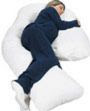
I had a horrible night last night. I've been sleeping on my side, due to my OB's urging. I just COULD NOT get comfortable. No matter which side I'm sleeping on, I cannot get comfortable. The pressure on my shoulders HURTS!

I am going to invest in a pregnancy pillow. They provide the much needed support I'm looking for. Maybe it won't be to expensive. We hope!